Laura drops out of business college
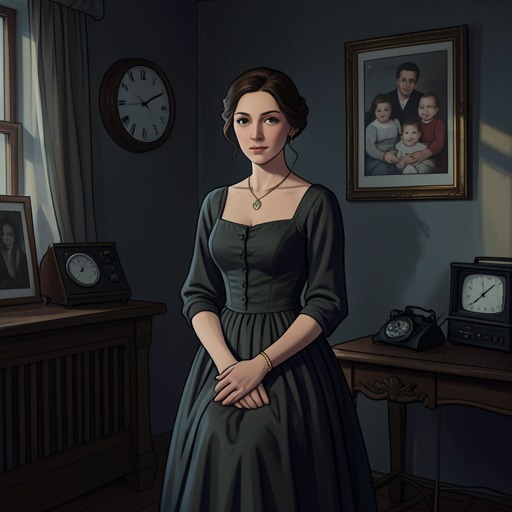
The Glass MenagerieLaura drops out of business college after a speed test triggers such acute distress that she cannot continue attending. The truth emerges only when Amanda visits the school expecting to discuss Laura’s progress: the attendance book shows that Laura stopped going after only a few days. That discovery defeats Amanda’s plan for her daughter’s financial independence and makes the search for a husband, and eventually a gentleman caller, carry the burden of the future Amanda had hoped education would secure.
The Discovery at Rubicam’s
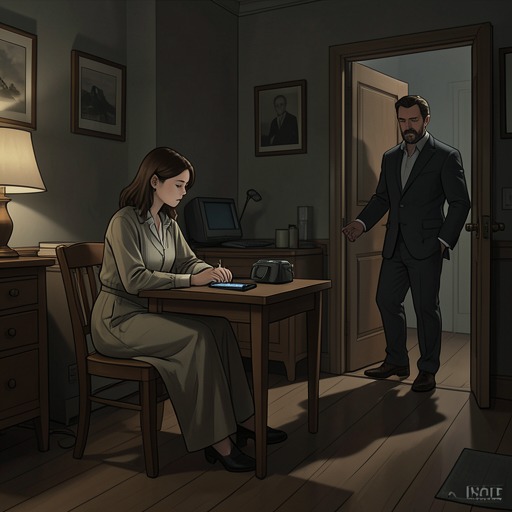
Amanda recounts that she went to Rubicam’s Business College to speak with Laura’s teachers, believing that Laura had been attending since early January. The typing instructor does not recognize the name Wingfield and tells Amanda there is no such student enrolled. When Amanda insists, the instructor suggests Laura may be the shy girl who dropped out after only a few days. Amanda rejects the explanation, claiming that Laura has gone every day for six weeks.
The attendance book settles the dispute: Laura’s name is there, followed by absences on every date, until the school determined she had dropped out. Faced with the record, Amanda first insists there must have been a mix-up. The instructor then remembers Laura distinctly. Laura’s hands shook so badly that she could not strike the right keys; during her first speed test, she became sick to her stomach, broke down, and nearly had to be carried to the washroom. She never returned after that morning. The school had telephoned the family, but no one answered.
That failed attempt to reach the household sharpens the revelation’s practical consequences. Amanda says she was working at Famous–Barr at the time, demonstrating brassieres, and describes herself as so weakened by the news that she could barely stand and had to sit down for a glass of water. The fifty dollars in tuition, along with her plans, hopes, and ambitions for Laura, seem to her to have vanished at once. Laura’s brief attendance had never become the steady progress Amanda imagined; the school’s record and the physical memory of the speed test make the gap between expectation and reality impossible to dismiss.
The Collapse of a Career Plan
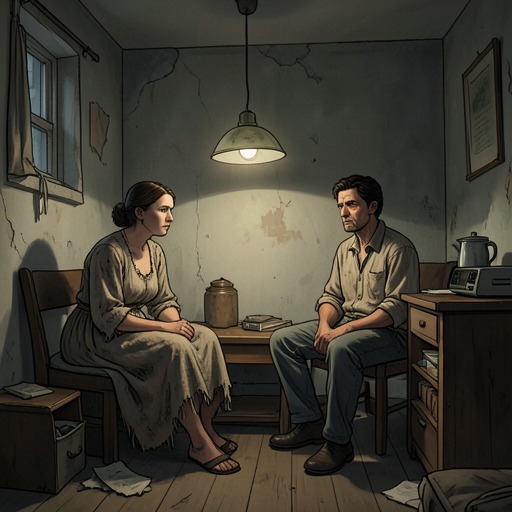
Laura’s explanation is concise: she could not face the situation. After the revelation, Amanda asks what the two of them can do with the rest of their lives. She imagines staying home, watching parades pass, occupying themselves with the glass menagerie, and playing the worn-out phonograph records left by Laura’s father. A business career is no longer a viable plan: Amanda says they have given it up because it brought on nervous indigestion.
The failed course therefore changes the stakes from a setback in training to a crisis about long-term support. Amanda fears the future of unmarried women without preparation for paid work, describing women in the South who live on relatives’ grudging patronage, confined to small rooms and dependent on one in-law after another. Her image of them as little birdlike women without a nest gives economic dependence a domestic shape: without work or a household of their own, they have no secure place to live. Amanda asks whether that is the future they have mapped out for themselves, then identifies marriage as the one alternative she can think of.
The failure also becomes part of Amanda’s recurring account of Laura’s limited prospects. She later recalls that the business college frightened Laura so badly that it made her sick, and pairs that failure with another unsuccessful attempt to bring her into social life through the Young People’s League at church. Laura spoke to nobody, nobody spoke to her, and Amanda says that she now spends her time with pieces of glass and worn-out records. The two failed efforts—vocational training and church sociability—leave Amanda seeing her daughter as drifting rather than moving toward an independent life.
From Training to the Gentleman Caller
After the fiasco at Rubicam’s, the idea of finding a gentleman caller for Laura becomes increasingly important in Amanda’s calculations. Tom describes it as an obsession: the image of the caller haunts the small apartment, and an evening at home rarely passes without some allusion to him. Even when nobody mentions him, Tom says, the hope remains visible in Amanda’s preoccupied expression and in Laura’s frightened, apologetic manner. The caller is not merely a romantic possibility; he is the imagined answer to the problem the failed career plan has left unsolved.
Amanda makes that connection explicit when she tells Tom that plans and provisions must be made for Laura, who is two years older than him and, in Amanda’s view, has let life pass without progress. She rejects the idea that Laura is simply a homebody unless home means a place of her own with a husband. She also links Laura’s future to Tom’s wish to leave, telling him that he will be free to go wherever he pleases once Laura is married, has a home of her own, and is independent. Until then, Amanda insists, he must look out for his sister because she is young and dependent.
The shift from education to marriage is thus bound to the family’s economic and emotional arrangements. Amanda frames Laura’s marriage as a route to a home and independence, while making it the condition for Tom’s departure as well. Her fear of repeating the abandonment associated with Laura’s father gives this plan additional force: she tells Tom that he reminds her of his father, who stayed out without explanation and then left her to manage alone. Laura’s dropout is consequently not an isolated educational episode; in Amanda’s thinking, it places both children’s futures under the pressure of the missing provider.
The Fiasco’s Presence in the Caller’s Visit
When a young man is expected at the apartment, Amanda treats the occasion as a corrective to Laura’s lack of callers. She calls for the wedding silver to be polished, the monogrammed table linen to be laundered, the windows to be washed, and fresh curtains to be put up. She also worries about clothing, and insists that the first young man introduced to Laura must not be received in a disorderly home. Her elaborate preparations show how much expectation has accumulated around the caller after the business-college plan collapsed.
Amanda’s effort to stage the visit extends to Laura’s appearance. She produces two powder puffs, wraps them in handkerchiefs, and stuffs them into Laura’s bosom, explaining that they are called Gay Deceivers. Laura refuses to wear them, but Amanda tells her she will. This physical imposition turns the hoped-for courtship into a performance Amanda attempts to arrange, just as the polished silver, clean windows, and special linen transform the apartment for the occasion.
The dropout’s consequences therefore persist beyond the school episode. Amanda’s vision of a professional future for Laura has yielded to a plan organized around marriage, dependence, and the promise of a household of her own. The gentleman caller becomes the focus of that plan, while Laura’s earlier bodily panic at the typewriter remains its unspoken point of origin: a vocational path failed because she could not endure it, and Amanda answers by preparing her for a different future that Laura herself does not control.